

YOUR CART IS CURRENTLY EMPTY
Why face-to-face events still win B2B deals
Quick answer
Trade shows still earn their budget in B2B because most buyers prefer to research on their own, yet many still want a person to confirm what they found before they commit. A trade show puts your team in front of those buyers at that moment, in a room they chose to attend. Digital channels are better for reach and early research. A stand is better for the conversations that move a deal forward.
What is a trade show in marketing?
A trade show, expo or exhibition is an event where companies in one industry take floor space to show their products and services to buyers, partners and media. For a B2B marketer it is a channel like any other, with a cost per conversation and a result you can measure. What makes it different is the direction of travel.
"In most other marketing, you are reaching out to your target market, but at a trade show, that target market is coming to you, providing a unique opportunity to talk to them."
Phil Hine, Displays 2 Go
How B2B buyers actually decide
Recent Gartner research on how B2B buyers decide helps explain why face-to-face time still matters, even as buying goes digital. Gartner surveyed more than 640 B2B buyers in August and September 2025. Its March 2026 release reported that 67% prefer a rep-free buying experience. Its May 2026 release added the other half of the picture:
- Buyers used an average of seven information sources during a recent purchase, and 45% used GenAI, mainly to research vendors and products.
- 69% prefer to validate AI-generated insights with a sales rep.
- Reps remain the most important information source when buyers are researching a business problem, identifying a preferred supplier and securing internal support, and finalising the purchase.
Gartner's Robert Blaisdell concludes that sellers "need to show up differently", engaging where they can help buyers validate information and reduce risk. Gartner's research is about sales reps, not events, but the link is direct: a trade show is one of the few places where that happens in volume. Visitors arrive already informed, often comparing suppliers on the same floor, and they can test what they read online against a product they can touch and a person they can question.
Exhibitions are also built into how Australian industries meet. The Australian Business Events Association's Domestic Forward Calendar 2026 reports that 66% of the future domestic association conventions secured by Australia's convention bureaux include a trade or exhibition component.
What a stand does that email and ads can't
There are plenty of reasons to exhibit. These five matter most to a B2B buyer weighing up the channel.
- A concentrated, self-selected audience. Everyone in the hall chose to spend a day on your industry. You are not paying to reach people who scroll past.
- Trust built in person. On the phone you are just another voice. In person, you become someone the buyer knows, recognises and wants to deal with again.
- Product demonstrations. A live demonstration answers questions a brochure can't, and lets a buyer's technical people see the product working. That can be what moves a supplier onto the shortlist.
- Several decision-makers at once. When colleagues from one buying group visit together, a single conversation can reach the user, the budget holder and the technical assessor.
- Market intelligence. Over the run of a show you can see what competitors are launching, hear what customers are asking for, and test your own messages against real reactions.
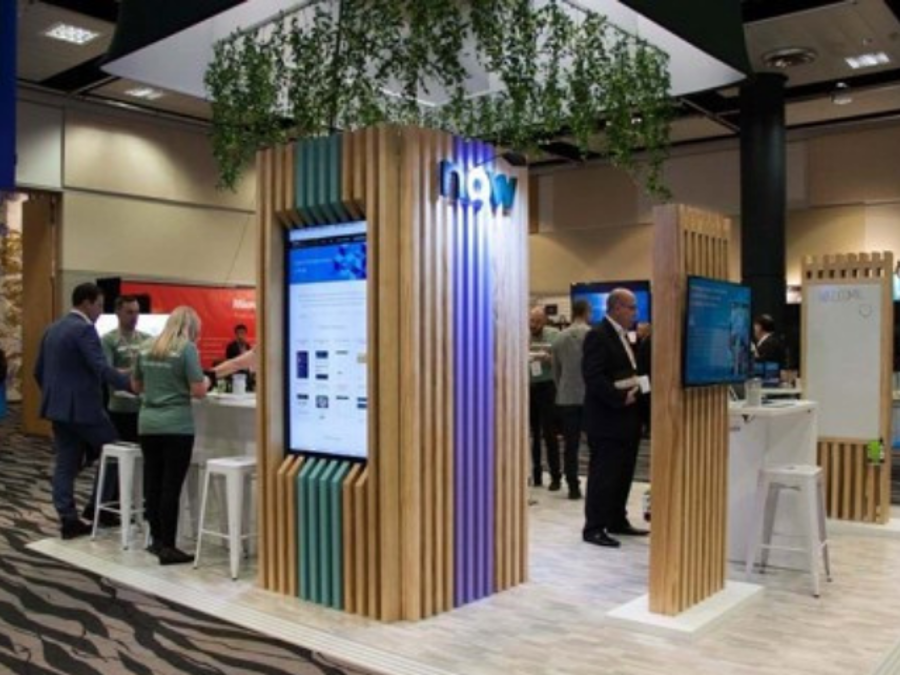
Trade shows within the full channel mix
A trade show is not a replacement for digital marketing. The two do different jobs at different stages, and they work best when each feeds the other.
| Channel | What it does well | Where it falls short |
|---|---|---|
| Search, social and paid media | Reach, early research, retargeting, measurable cost per click | Hard to build trust or answer a complex question |
| Email and content | Nurturing known contacts and supporting self-directed research | Easy to ignore; no live product |
| Webinars and virtual events | Low-cost education for a wide audience | Harder to hold attention; little informal conversation |
| Trade shows and expos | Live demonstrations, meeting buying groups, validating what buyers found online | Higher upfront cost; fixed dates |
In practice: use digital channels before the show to book meetings and invite key accounts, use the stand to hold the conversations, then use email and sales follow-up to convert.
Trade show strategy: making the face-to-face hours count
A show gives your team a fixed number of hours in front of buyers. The stand and the plan decide how many good conversations fit into them.
- Pick the show on its visitors, not its size. Ask the organiser for the last event's visitor profile: job titles, industries and how many attend to buy.
- Set one or two objectives first. Qualified leads, meetings with named accounts, or a product launch each lead to a different stand.
- Design for conversation. Keep the front of the stand open so visitors can step in easily, give them a spot to sit or stand and talk, and use graphics that explain what you do before anyone reaches you. Our custom exhibition stands are modelled in 3D and signed off on screen before the build starts, so layout changes are made early.
- Give the demonstration a home. If the product is the reason people stop, put it at the front, at a working height, with a screen or counter that suits it.
- Staff with people who can answer. Buyers come to validate what they have read, so put people on the stand who can talk about specifications, pricing approach and delivery.
- Capture details properly. Use a scanner or form that records what the visitor wants and how soon, not just a name.
For a larger space, plan early: a typical custom build needs six to eight weeks between brief sign-off and opening day. For smaller spaces, portable kits and other options are on our exhibition stands page.
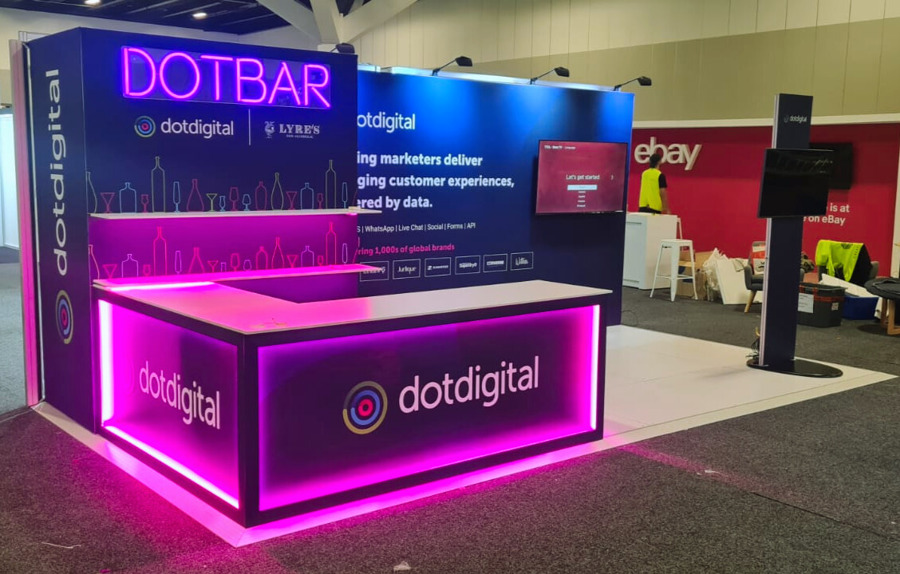
Measuring trade show ROI and success
Decide what success looks like before you book the space. Without that, there is nothing to measure against afterwards.
- Leads and their quality. Count leads, but also how many meet your qualification criteria.
- Meetings and pipeline. Track meetings held, opportunities opened and their value.
- Sales. Track deals closed from show contacts over your normal sales cycle, which in B2B can run for months.
- Cost per qualified lead. Total cost of the show (space, stand, travel, staff time, follow-up) divided by qualified leads.
- Return on objective. Not every goal is revenue in the quarter. Brand awareness, partner introductions and launch coverage can be measured too. Our article on ROI vs ROO explains the difference.
A simple ROI check is: (revenue from show-sourced deals minus total show cost) divided by total show cost. Our FAQ on measuring exhibition success gives a longer list of measures.
None of this works without follow-up. Send a personalised email within 48 hours that thanks the visitor and sends what they asked for, then keep in touch until they are ready to buy. Assign the follow-up to a named person before the show. Our article on following up leads covers how to set it up.
When digital is the better spend
Trade shows are not always the right answer. Digital is likely to be the better spend when:
- your buyers are spread across many industries and no single show reaches enough of them
- the product is simple, low value or bought online without a conversation
- the show's visitors are mostly students, the public or other exhibitors rather than buyers
- you can't staff the stand with people who can answer serious questions
- there is no plan or owner for follow-up.
If none of those apply, a well-run stand is still one of the most direct ways to meet B2B buyers at the moment they want to talk to a person.
Next step
If you have a show on the calendar, tell us the event, your space and what a good result looks like. We will recommend a stand built to start sales conversations, from a portable kit to a custom exhibition stand designed, built and installed by our team.
About the author
Displays 2 Go